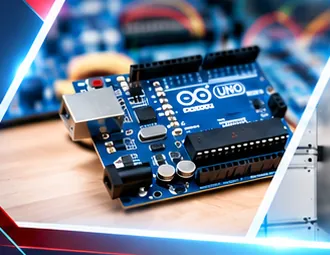
Embedded Systems & IoT Project
Arduino UNO programming • Electronics and creative coding
Microcontrollers, sensors and connected devices
Course outline
- Arduino UNO hardware, pins and IDE setup
- Circuits, LED outputs and digital I/O
- Variables, loops, conditions and delays
- Sensors, servo motors and basic actuators
- Mini project: traffic lights or alarm
Desired learning outcomes
- Identify microcontroller parts and follow safe wiring practices.
- Write and upload Arduino sketches using basic logic.
- Read sensor inputs and control LEDs or a servo motor.
- Build, test and explain a working Arduino prototype.
Revised Bloom’s taxonomy By the end of this subject, students can
- Remember
Identify the main parts of a simple circuit and name common sensor types.
- Understand
Explain how a sensor reading can trigger an output.
- Apply
Assemble a simple circuit and record sensor readings under different conditions.
- Analyze
Graph the readings and identify patterns or unusual values.
- Evaluate
Use the data to justify a trigger threshold for an alarm.
- Create
Design and build a device that measures a condition and reports a change.
Physics
Voltage, current, resistance and how sensors detect physical changes.
Maths
Units of measurement, line graphs and numerical thresholds.
Student demonstration
A sensor device with a graph and an explanation of its trigger threshold.
Project evidence at this level
Working Arduino prototype — Circuit + code + short demonstration